Forest Hill, TX
TPO roofing in Forest Hill
Make a sound decision about your TPO roof, from a repair at one seam to a complete single-ply replacement.
What a TPO roof does
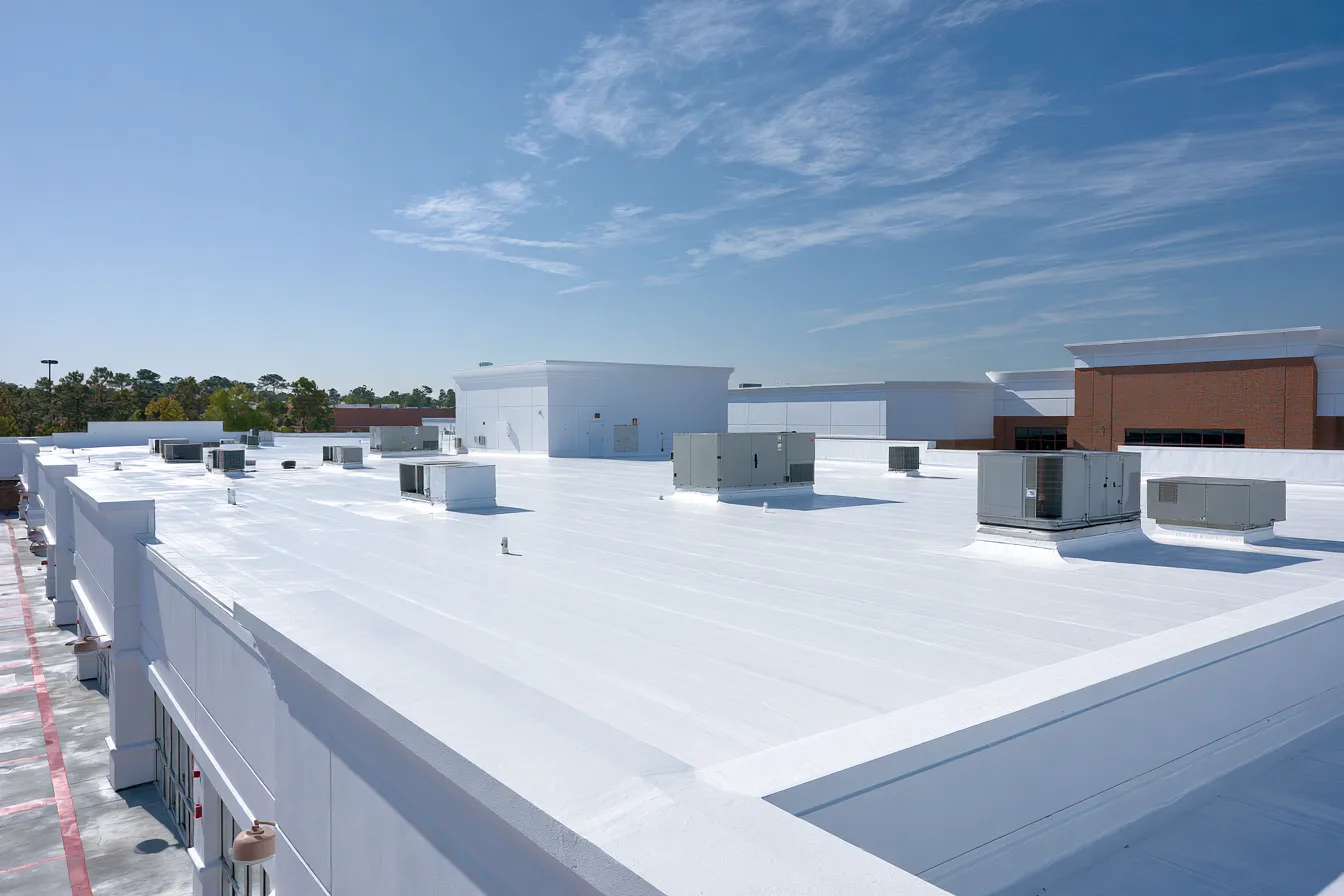
TPO is a flexible single-ply roofing membrane used on low-slope buildings. Overlapping sheets are joined with hot-air welds to make a continuous weather barrier. Separate flashing details carry that protection around walls, pipes and equipment supports.
Its clean surface is only the visible layer. The roof also needs support, insulation, attachment and a route for rainwater to leave. That is why a TPO proposal should describe a complete assembly. A membrane choice by itself cannot settle how the roof handles drainage or the equipment above your occupied space.
Seams, edges and rooftop equipment
The long open areas are easier to see. Changes in direction and material deserve just as much attention.
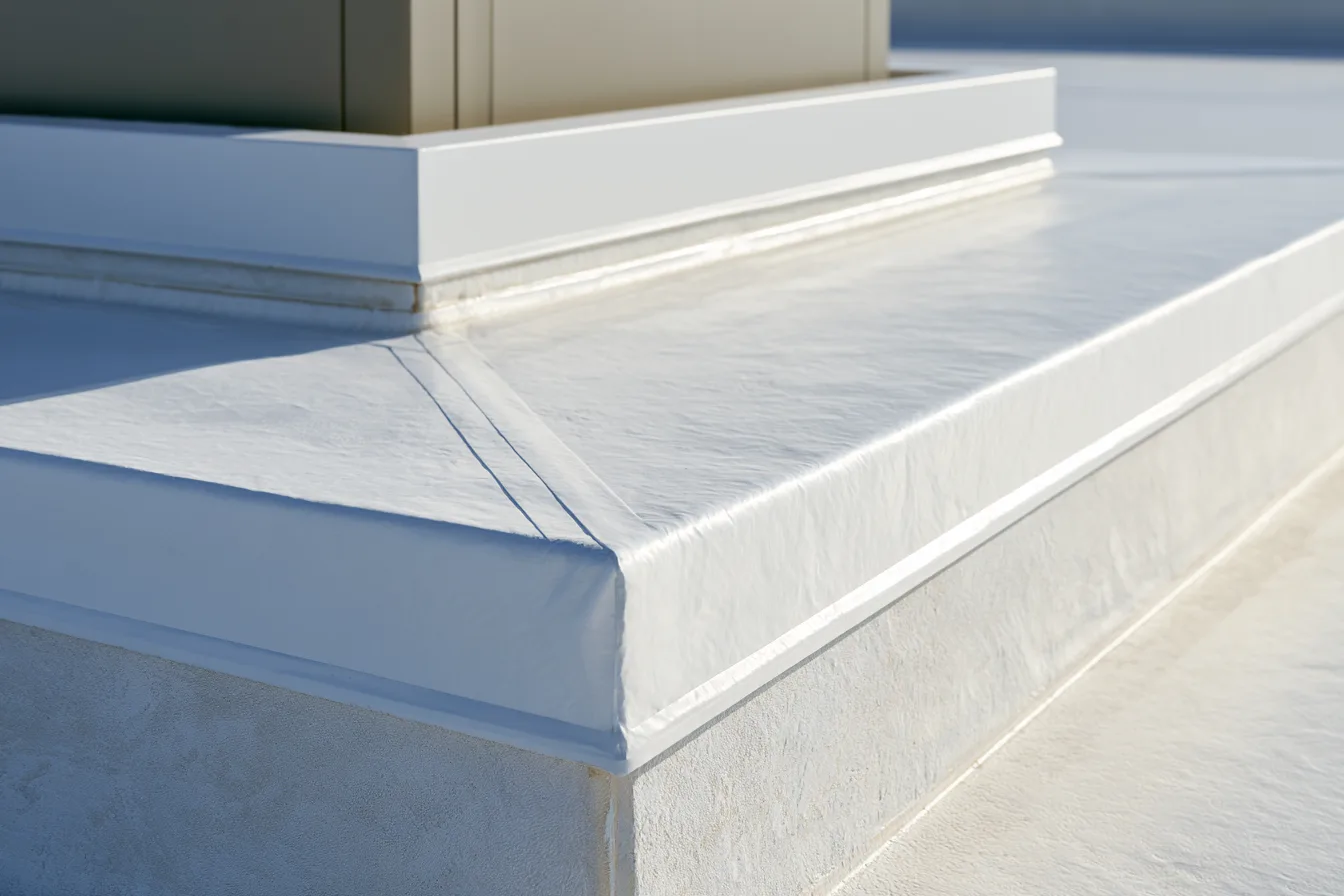
Welded sheet overlaps
An open seam leaves a route under the membrane. Professional seam checking looks for a sound weld, including where several overlaps meet. A visible seam line is normal; an opening at that line is a different finding.
Perimeters and wall transitions
Membrane attachment and flashing keep the edge tied into the building. Loose edge components or stressed corners need their underlying attachment considered, rather than simply covering the visible gap.
Equipment curbs and service paths
The raised base under a rooftop unit interrupts the roof surface. Its corners and flashing need continuity, while planned service paths help keep routine equipment access from becoming repeated wear on the membrane.
Repairing an existing TPO roof
A localized puncture can be repaired with compatible membrane when the surrounding material remains suitable. Aged TPO needs the prescribed cleaning and preparation for a reliable new weld. The repair is more than adhesive over a hole: the patch must connect to a clean, workable surface.
The limit becomes clearer when deterioration is widespread, old repair products interfere with bonding or wet insulation extends beyond the defect. Those conditions can make repeated surface patches poor value. A repair assessment establishes both the entry point and how much surrounding material remains useful.
Restoration is another possibility for some existing roofs, but coating an aged TPO surface requires separate compatibility and adhesion evaluation. Being TPO does not automatically make the roof a coating candidate.
Designing the full replacement assembly
A better replacement starts below the white sheet. These choices affect both installation cost and how the building is protected.
- A usable deck and insulation
The supporting deck must be suitable for the selected system. Damaged or wet layers change removal work, while insulation design addresses the building's thermal needs. A cover board, where specified, adds a supporting layer immediately below the membrane.
- Attachment matched to the building
Adhered, mechanically fastened and induction-welded systems use different ways of securing the roof. Deck type, building geometry and the required wind performance shape that choice. Membrane thickness is one specification, not a substitute for the attachment design.
- Drainage and finished heights
Tapered insulation can help direct water toward outlets. Added insulation also changes the roof height beside drains, curbs and walls, so those junctions need compatible details. Our flat roofing guide develops the drainage side of that decision.
TPO roofing questions
Does a white commercial roof have to be TPO?
No. Other membranes and coatings can also be white. Existing records, product markings and a roof examination help identify the system before selecting repair materials. Color alone is not enough.
Can new TPO go over the existing roof?
A recover can be possible when the existing assembly, attachment, moisture condition and applicable requirements allow it. Wet or unsuitable layers still need removal. Added roof height and weight also matter, especially at drains, edges and equipment curbs.
How much does TPO roofing cost in Forest Hill?
Area gives a starting point, but insulation, removal, drainage and rooftop details make a large difference. The roof cost guide includes a published DFW TPO planning band. It is regional budgeting evidence, not a Forest Hill bid or a fixed package.
Is a thicker membrane always the better roof?
Thickness matters, but a thicker sheet does not correct weak attachment, incomplete welds or poor drainage. The complete specified assembly and the quality of its details determine whether the material choice fits the project.
Forest Hill Roofing Company
Discuss your TPO roof
Tell us whether you're dealing with an existing leak or planning a new membrane. A clear starting point helps move the right roof conversation forward.
(817) 634-0700