Forest Hill, TX
Flat roof repair and replacement in Forest Hill
Get a clearer path through flat-roof leaks, standing water and replacement decisions for your Forest Hill building.
Flat roofs still need water to move
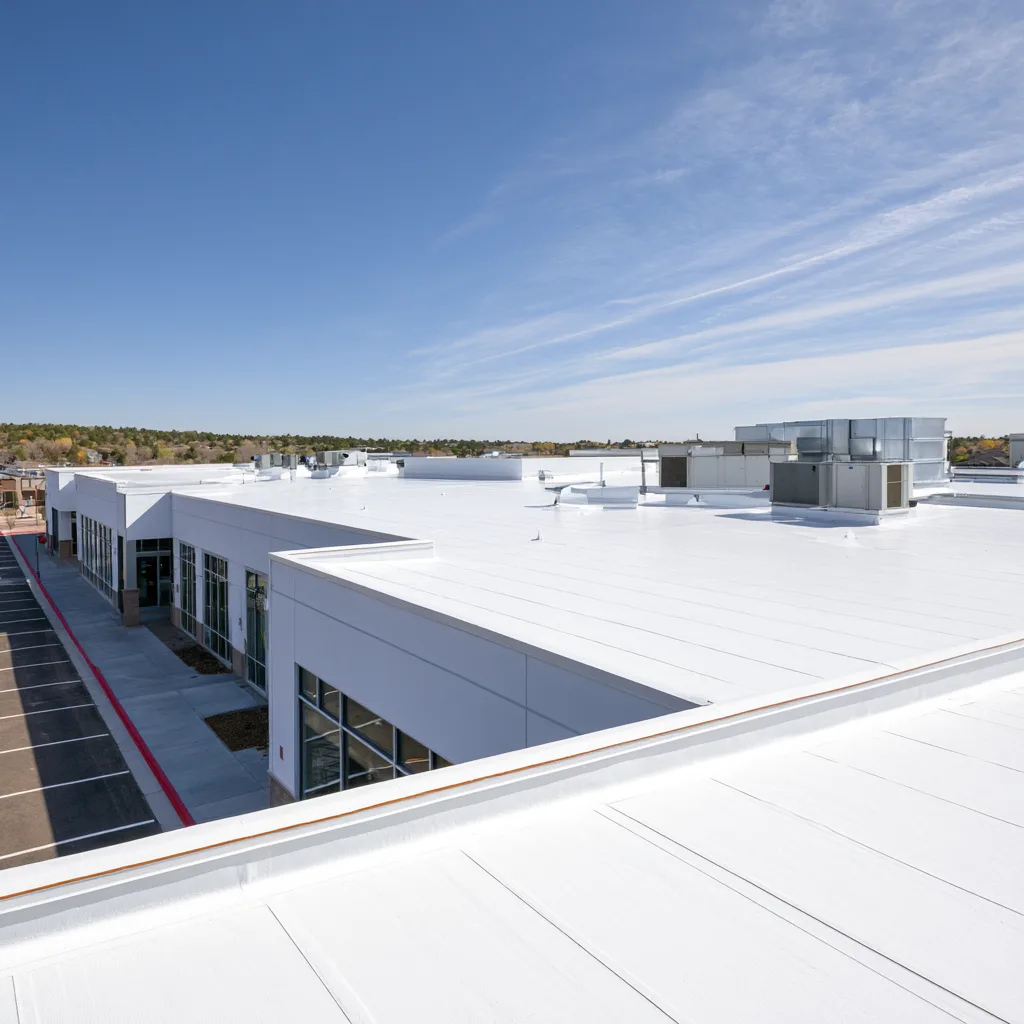
A flat roof is usually a low-slope roof, with a gradual fall toward drains, gutters or openings through a parapet called scuppers. The membrane keeps rain outside while that drainage route carries it away. A roof can have a sound surface and still need attention if the water has nowhere useful to go.
The starting distinction is simple: is water getting through a failed detail, or is a drainage problem keeping it against the roof? Sometimes both are involved. Understanding that relationship keeps a repair from stopping at the most obvious spot while leaving the larger cause in place.
Three places to trace a low-slope leak
Across the roof surface
Punctures, splits and failed seams create entry points. Water can travel within the roof before appearing indoors, so the ceiling stain and the opening may not line up. The repair area follows the affected roofing and underlying materials.
Around changes in height
Parapet walls, equipment curbs and adjoining roof sections depend on flashing to bridge the transition. Movement or a failed corner can interrupt that protection even while the broad field of roofing looks intact.
At drainage outlets
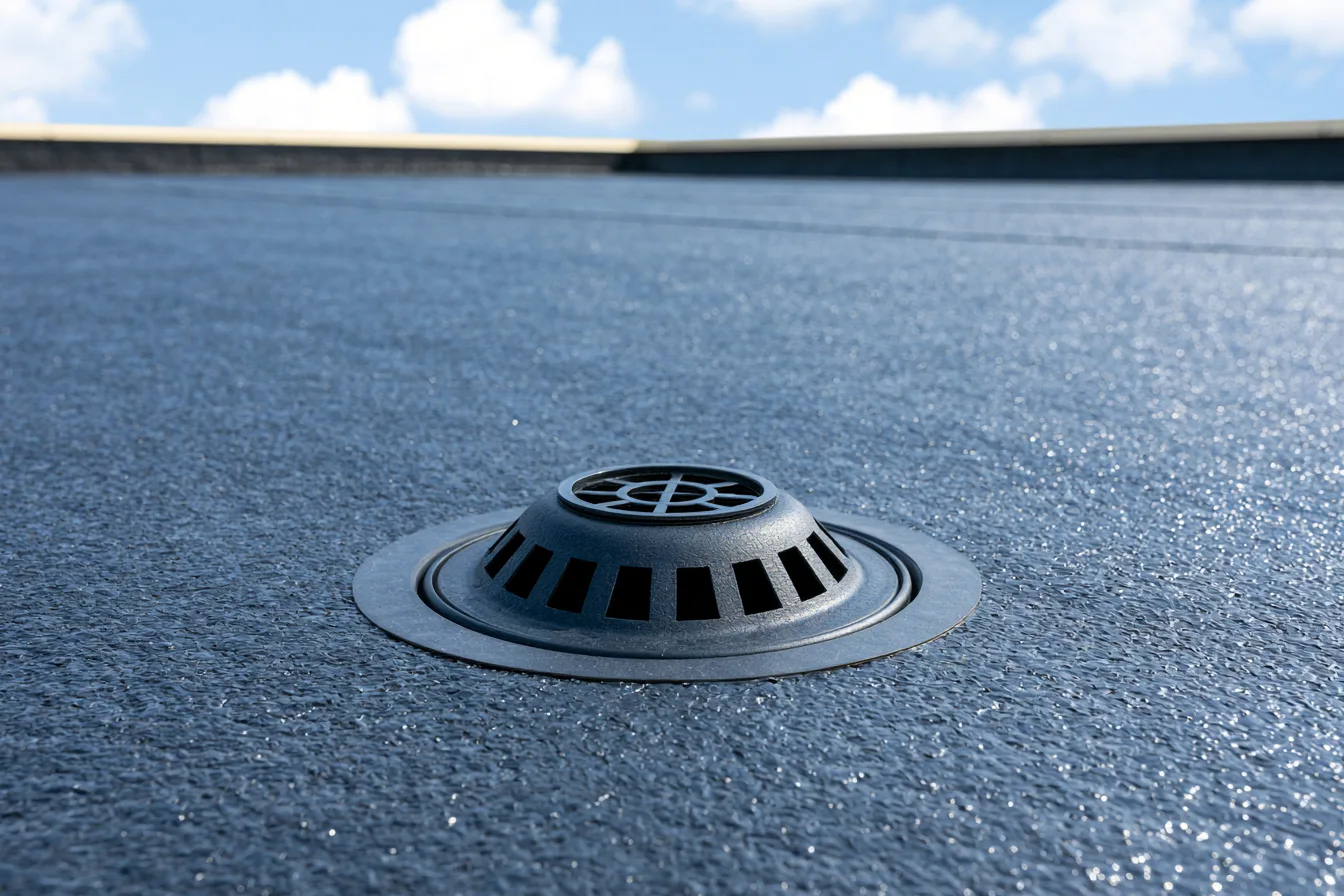
The membrane connection around a drain or scupper is itself a waterproofing detail. An open connection can leak; debris at an otherwise intact outlet can restrict flow. Those findings lead to different repairs.
When drainage changes the scope
Clearing an obstructed outlet and correcting roof slope are different jobs. When an outlet is open but water remains trapped in a low area, adding another surface layer does not change the route out. The cause may involve insulation layout, the outlet position or movement in the supporting structure.
Tapered insulation can create a directed fall as part of a roof design. Small raised sections called crickets can divert water around equipment or toward an outlet. Those changes also have to work with parapet flashing, curb heights and the building's primary and overflow drainage. A suspected structural sag needs qualified evaluation before it is treated as an insulation problem.
This is one reason a roof coating cannot substitute for drainage work. The surface product and the path water takes are separate parts of a useful repair.
Choosing the next roof assembly
Flat describes the roof shape, not one material. The next step depends on what is installed and which layers remain serviceable.
Keep a serviceable existing roof
A localized defect with sound adjacent material can support repair. Restoring a compatible surface may also fit once moisture and preparation needs are established. Both approaches depend on retaining a roof that is still suitable beneath the work.
Plan a new membrane assembly
Single-ply systems such as TPO roofing and asphalt-based low-slope assemblies use different materials and installation methods. Deck suitability, insulation, attachment, drainage and roof traffic determine the full design. A familiar product name alone does not resolve those choices.
Open up failed layers
Extensive wet insulation, an unsuitable substrate or changes needed below the membrane can favor removal and replacement. That added work may be the part that makes a new roof useful, rather than an optional extra to a surface-only price.
Flat roofing questions
Does standing water mean the whole roof needs replacing?
Not automatically. An obstructed outlet can need maintenance, while a persistent low area may need drainage redesign. The amount of affected roofing, moisture beneath it and the condition of the deck help determine whether the work stays localized or becomes part of replacement.
Can a flat roof leak only when it rains hard?
Yes. Heavier rain can expose restricted drainage or a flashing opening that less water never reaches. Wind-driven rain can also find a different path at walls and transitions. Timing helps narrow the investigation, but it does not identify the cause by itself.
What makes one flat roof replacement cost more than another?
Removal depth, wet insulation, drainage changes and the number of curbs and penetrations can outweigh a simple difference in roof area. The roof cost guide provides regional commercial planning rates, while these assembly details explain why actual proposals differ.
Is every flat commercial roof TPO?
No. Flat roofs can use several single-ply or asphalt-based systems, and some have an added coating. Repair materials need to match the identified system. The surface color and building type do not establish that identity.
Forest Hill Roofing Company
Bring the flat roof problem into focus
Describe the leak or drainage concern and how it affects the space below. Start with what you've noticed; the technical diagnosis comes from the roof itself.
(817) 634-0700